
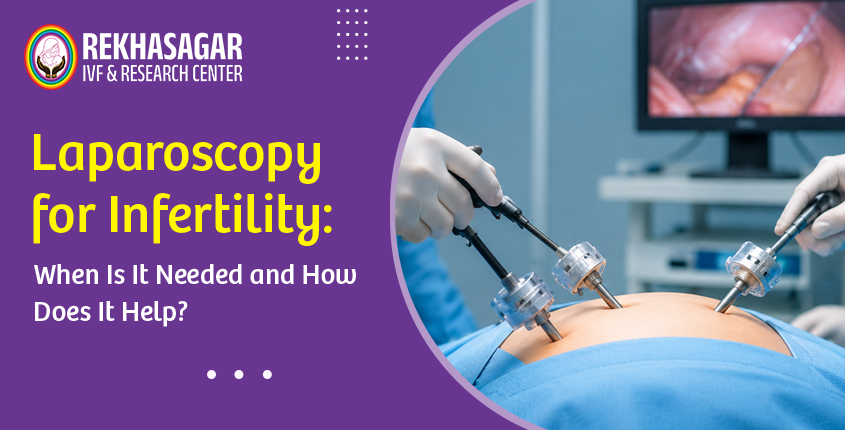
For couples trying to conceive, discovering that a medical condition may be affecting fertility can raise many questions. One procedure that doctors may recommend in selected cases is laparoscopy. It is a minimally invasive surgical technique used to examine the pelvic organs and, when necessary, treat certain conditions affecting reproductive health.
But is laparoscopy necessary for every woman experiencing difficulty getting pregnant? Does it help with blocked fallopian tubes, endometriosis or ovarian cysts? Understanding when this procedure is recommended can help you have a more informed discussion with your gynaecologist.
Let’s understand what laparoscopy involves, the conditions it can address and how it fits into infertility evaluation and treatment.
What Is Laparoscopy?
Laparoscopy is a minimally invasive surgical procedure that allows a doctor to examine the organs inside the abdomen and pelvis using a thin instrument called a laparoscope. The instrument has a camera that provides images of the internal organs on a monitor.
The procedure is generally performed under general anaesthesia. Instead of a large abdominal incision, the surgeon makes small incisions through which the camera and surgical instruments are introduced.
Depending on the findings, the doctor may perform a treatment during the same procedure.
In women with fertility-related concerns, laparoscopy can help examine the uterus, ovaries, fallopian tubes and surrounding pelvic structures.
When Is Laparoscopy Recommended for Infertility?
Laparoscopy is not required for every woman who experiences difficulty conceiving. Many fertility concerns can initially be evaluated through medical history, ultrasound scans, blood tests and other investigations.
However, your doctor may consider laparoscopy when there is a clinical reason to investigate or treat a suspected pelvic condition.
Some situations include:
1. Endometriosis
Endometriosis occurs when tissue similar to the lining of the uterus grows outside the uterus. It may involve the ovaries, fallopian tubes and other pelvic structures.
Some women experience painful periods, pelvic pain or pain during intercourse, while others may have no obvious symptoms.
Depending on its location and severity, endometriosis can affect reproductive health. Laparoscopy may be considered to identify and surgically treat selected cases.
Read more about gynaecological and fertility care at Rekha Sagar Fertility Centre.
2. Blocked Fallopian Tubes
Fallopian tubes play an important role in natural conception because fertilisation usually takes place inside a fallopian tube.
Tubal blockage may occur due to previous infections, pelvic inflammation, endometriosis or surgical adhesions.
Your doctor may initially recommend investigations such as an HSG to assess whether the tubes are open. In selected cases, laparoscopy with dye testing can provide additional information about the fallopian tubes and surrounding pelvic structures.
Depending on the location and extent of the blockage, further treatment options may be discussed.
3. Ovarian Cysts
Ovarian cysts are fluid-filled or other types of sacs that develop in or on the ovaries. Many are harmless and disappear without treatment.
However, certain cysts, including some endometriotic cysts, may require further evaluation.
If surgery is considered necessary, laparoscopic ovarian cystectomy may be an option. The decision should take into account the type and size of the cyst, symptoms, age and ovarian reserve, particularly when pregnancy is desired.
4. Pelvic Adhesions
Pelvic adhesions are bands of scar tissue that may develop following infection, inflammation or previous surgery.
These adhesions can sometimes affect the normal relationship between the ovaries, fallopian tubes and surrounding organs.
Laparoscopy allows the surgeon to examine these structures and consider whether removing the adhesions is appropriate.
5. Uterine Fibroids
Fibroids are non-cancerous growths that develop in or around the uterus.
Their effect on fertility depends on their size, number and location. Fibroids that distort the uterine cavity may have a different impact from those located on the outer surface of the uterus.
In selected cases, laparoscopic myomectomy may be considered to remove fibroids while preserving the uterus.
The decision depends on an individual fertility assessment.
How Is Laparoscopic Surgery Performed?
Although the exact procedure varies depending on the medical condition, laparoscopic surgery generally involves the following steps:
- Pre-operative assessment: Your doctor reviews your medical history, investigations and fitness for anaesthesia.
- Anaesthesia: The procedure is generally performed under general anaesthesia.
- Small incisions: Small openings are made in the abdominal area.
- Camera insertion: A laparoscope is introduced to view the pelvic organs.
- Treatment, if required: Specialised instruments may be used to treat the identified condition.
- Completion and recovery: The instruments are removed, the incisions are closed and you are monitored during recovery.
The duration of surgery and hospital stay depend on the type and complexity of the procedure.
What Are the Benefits of Laparoscopy?
When surgery is medically appropriate, laparoscopy offers several potential advantages compared with conventional open surgery.
These may include:
- Smaller surgical incisions.
- Less visible scarring.
- Reduced post-operative discomfort in many cases.
- Shorter hospital stay for many procedures.
- Earlier return to routine activities.
- Direct visual examination of pelvic organs.
- The possibility of diagnosis and treatment during the same procedure.
However, laparoscopy is still surgery and carries risks, including bleeding, infection, injury to surrounding organs and anaesthesia-related complications. Your doctor should explain the benefits and risks relevant to your condition.
Does Laparoscopy Improve the Chances of Pregnancy?
This is one of the most common questions among women considering fertility-related surgery.
The answer depends on the underlying condition.
For example, treating certain pelvic adhesions, selected cases of endometriosis or specific tubal problems may help address factors affecting fertility.
However, surgery does not guarantee pregnancy. Its usefulness depends on several factors, including:
- The woman’s age.
- Ovarian reserve.
- The condition of the fallopian tubes.
- The severity of endometriosis.
- The presence of male-factor infertility.
- Other reproductive health conditions.
In some situations, assisted reproductive treatments such as IVF may be more appropriate than surgery. Your fertility specialist can explain the available options after reviewing both partners’ investigations.
Learn more about IVF treatment and other fertility services at Rekha Sagar Fertility Centre.
Laparoscopy vs Hysteroscopy: What Is the Difference?
Both procedures are used in gynaecological care, but they examine different areas.
Laparoscopy: Examines the outside of the uterus, ovaries, fallopian tubes and surrounding pelvic structures through small abdominal incisions.
Hysteroscopy: Examines the inside of the uterine cavity by passing a thin instrument through the vagina and cervix. No abdominal incision is required.
In selected cases, both procedures may be performed during the same surgical session.
Read more about hysteroscopy treatment.
How Long Does Recovery Take After Laparoscopy?
Recovery varies according to the type of surgery performed, the patient’s general health and whether any complications occur.
Some patients may return to light activities within a few days, while more extensive procedures require additional recovery time.
During recovery, your doctor may advise you to:
- Take prescribed medicines as directed.
- Keep the incision areas clean and dry.
- Avoid strenuous activities until medically cleared.
- Attend scheduled follow-up appointments.
- Report fever, worsening abdominal pain, heavy bleeding or other concerning symptoms promptly.
Always follow your surgeon’s individual post-operative instructions.
Who Should You Consult for Laparoscopy in Karimnagar?
Women experiencing pelvic pain, suspected endometriosis, ovarian cysts, tubal problems or fertility-related concerns may benefit from a gynaecological evaluation.
At Rekha Sagar Fertility Centre, Karimnagar, laparoscopy is among the listed services. Dr. Rekha Rani is a gynaecologist, infertility specialist and laparoscopic surgeon.
The appropriate investigation or procedure depends on the patient’s symptoms, medical history and clinical findings.
For more information about the specialist, visit the Dr. Rekha Rani profile.
Frequently Asked Questions About Laparoscopy
Is laparoscopy necessary for every infertility patient?
No. Laparoscopy is not a routine requirement for every infertility patient. It is considered when there is a specific clinical indication.
Can laparoscopy help with blocked fallopian tubes?
In selected cases, laparoscopy can help examine tubal problems and may allow certain tubal procedures. The appropriate treatment depends on the location and severity of the blockage.
Can I conceive naturally after laparoscopy?
Natural conception may be possible after certain fertility-related conditions are treated. However, the outcome depends on individual reproductive health factors.
Is laparoscopic surgery painful?
The procedure is performed under anaesthesia. Some abdominal discomfort, bloating or shoulder-tip pain may occur afterward. The level of discomfort varies between patients.
How long should I wait to try for pregnancy after laparoscopy?
There is no single waiting period for everyone. It depends on the procedure performed, healing and the doctor’s advice.
Is laparoscopy better than IVF?
These procedures serve different purposes. Laparoscopy is used to diagnose or treat selected surgical conditions, whereas IVF is an assisted reproductive treatment. Your doctor can help determine which option is appropriate.
Final Thoughts
Laparoscopy can be an important part of fertility and gynaecological care when conditions involving the ovaries, fallopian tubes or surrounding pelvic organs need further evaluation or treatment.
However, it is not necessary for everyone experiencing infertility. A proper assessment helps determine whether surgery, medication, observation or assisted reproductive treatment is appropriate.
Understanding the available options and discussing your concerns with a qualified gynaecologist can help you make informed decisions about your reproductive health.