PCOS/PCOD Diet Plan
Understanding PCOS and Diet
Polycystic Ovary Syndrome (PCOS/PCOD) is one of the most common hormonal disorders affecting women of reproductive age. It is closely linked to insulin resistance, weight gain, irregular periods, and difficulty in conceiving. The good news is that a well planned, balanced diet can help manage PCOS symptoms, restore hormonal balance, improve ovulation, and increase the chances of a healthy pregnancy.
At Rekha Sagar Fertility Clinic, Karimnagar, our fertility experts recommend a low glycemic, anti inflammatory diet rich in fiber, lean protein, and healthy fats, combined with regular exercise and lifestyle changes, as the first step in managing PCOS naturally.
Key Diet Principles for PCOS
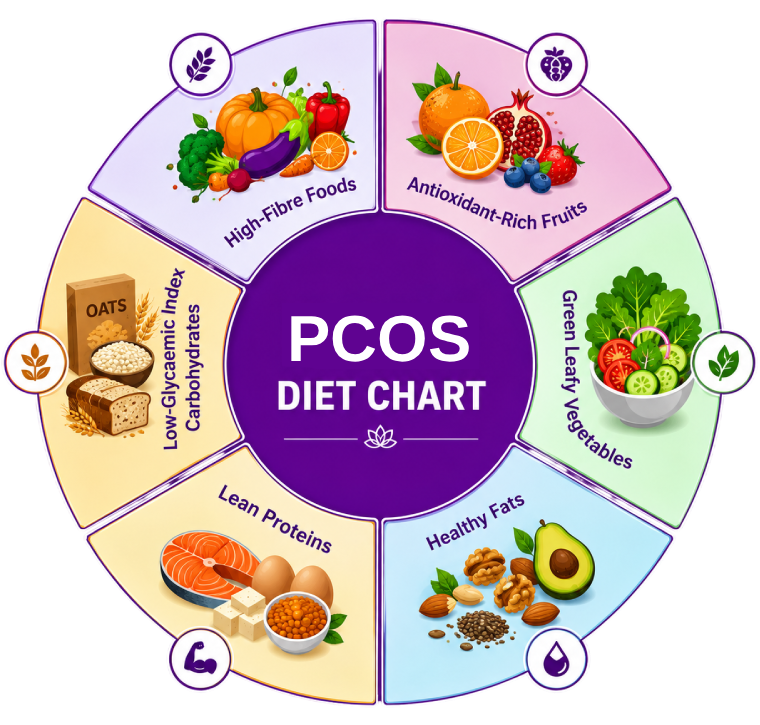
- Choose low GI carbohydrates: whole grains, millets, and legumes help control blood sugar and insulin spikes.
- Include high fiber foods: fiber slows sugar absorption and supports gut and hormonal health.
- Add lean protein to every meal: protein keeps you full longer and stabilizes blood sugar.
- Do not skip meals: regular, smaller meals every 3 to 4 hours prevent insulin spikes.
- Limit sugar, refined carbs, and processed foods: these worsen insulin resistance.
- Stay hydrated: aim for 2.5 to 3 litres of water daily.
- Include healthy fats: nuts, seeds, and olive oil support hormone production.
- Exercise regularly: 30 to 45 minutes of brisk walking or yoga most days of the week.
Foods to Include vs Foods to Avoid
| Include | Avoid |
|---|---|
| Millets (jowar, ragi, bajra), brown rice | White rice, maida, refined flour |
| Leafy greens, broccoli, beans, gourds | Fried and deep fried foods |
| Eggs, fish, chicken, paneer, tofu | Sugary drinks, sodas, packaged juices |
| Nuts and seeds (almonds, flaxseed, pumpkin seeds) | Bakery items, cakes, pastries |
| Curd, buttermilk, low fat dairy | Excess dairy or full fat milk products |
| Fresh fruits (apples, berries, guava, pears) | High sugar fruits in excess (mango, banana in large amounts) |
| Whole legumes and dals | Processed or canned foods, junk food |
| Healthy fats: olive oil, ghee in moderation | Trans fats, excess oil |
Sample PCOS Diet Chart (Food Menu)
| Meal Time | Menu |
|---|---|
| Early Morning (6:30 to 7:00 AM) | Warm water with lemon and a pinch of cinnamon, 4 to 5 soaked almonds and walnuts |
| Breakfast (8:00 to 8:30 AM) | Vegetable moong dal chilla, ragi dosa or oats upma with vegetables, plus 1 boiled egg or a glass of curd |
| Mid-Morning (10:30 to 11:00 AM) | 1 seasonal fruit (apple, guava or berries) or coconut water |
| Lunch (1:00 to 1:30 PM) | 2 multigrain or jowar rotis, or 1 cup brown rice, with dal, a bowl of vegetable curry, salad and curd |
| Evening Snack (4:30 to 5:00 PM) | Roasted chana, sprouts salad, or buttermilk with roasted cumin |
| Dinner (7:30 to 8:00 PM) | Grilled fish, chicken, paneer or tofu with sauteed vegetables and a small bowl of dal or khichdi |
| Before Bed (9:30 PM) | A glass of warm turmeric milk (optional) |
Note: Portion sizes and specific foods should be personalized based on individual weight, insulin levels, and any other health conditions. Please consult our fertility specialist and dietitian for a customized plan.
Why Choose Rekha Sagar Fertility Clinic?
Dr. Rekha Sagar and team offer complete PCOS/PCOD management combined with fertility care, including personalized diet counselling, hormonal evaluation, and advanced treatment options for women trying to conceive.
Book a consultation today to start your journey toward hormonal balance and a healthy pregnancy.
Frequently Asked Questions
A low-glycaemic diet works best. It combines whole grains and millets, high fibre, lean protein and healthy fats, with regular meals.
Limit sugary drinks, maida, white rice, bakery items, fried foods and processed food. These can worsen insulin resistance.
Diet and exercise can improve ovulation for many women. Some still need ovulation-induction medicines, IUI or IVF, so a fertility evaluation is worthwhile.
Yes, in controlled portions. Choose millets (jowar, ragi, bajra), brown rice or multigrain rotis, and pair them with dal and vegetables.
About 30 to 45 minutes of brisk walking or yoga on most days is a sensible target. Build up gradually.
This varies from person to person. Many women see changes in cycles and energy over a few months, and your doctor can track your progress.